
MLE Trailer Solutions • Dump trailer buying guide
Buy the right dump trailer size for the work you actually do.
Is a 5×10 big enough? Should you move up to a 6×12? Is a 7×14 worth it? Here's how to choose based on the material you haul, usable payload and what your truck can safely tow.
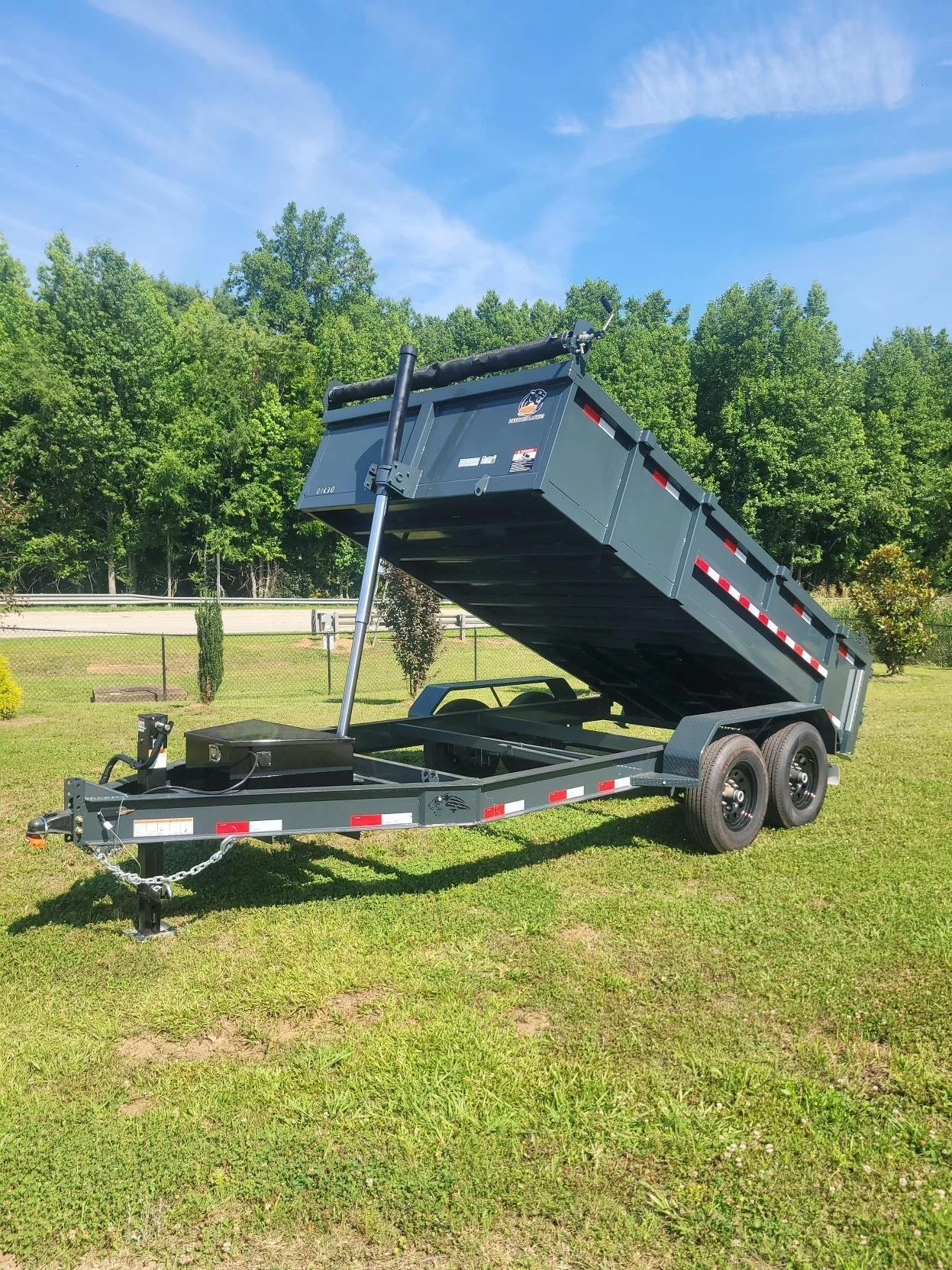
The short answer
For occasional property work, a 5×10 or 6×10 dump trailer is often a sensible place to start. For landscaping crews and contractors who need more floor space, a 6×12 is a versatile middle ground. For larger commercial jobs, compare 7×14 and 7×16 models. But bed size alone never tells you how much weight a trailer can carry. Your specific trailer's payload rating and your tow vehicle are just as important.
At MLE Trailer Solutions in Anderson, South Carolina, we help buyers compare compact, high-side and heavy-duty dump trailers. We built this guide around the same kinds of sizes we've listed on our dump trailer inventory page and our sold trailer archive.
Quick comparison
Dump trailer size chart: 5×10 vs. 6×10 vs. 6×12 vs. 7×14
These are common use cases, not guaranteed carrying capacities. Two trailers with the same bed dimensions can have different weight ratings, empty weights and equipment.
| Bed size | Best fit | What to consider |
|---|---|---|
| 5×10 | Homeowners, tight driveways, occasional cleanup | Compact footprint; verify payload before hauling stone or soil. |
| 6×10 | Property maintenance, light landscaping, frequent small loads | Extra width while keeping a shorter bed. |
| 6×12 | Landscapers, general contractors, mixed-use hauling | More usable floor area; compare 7K vs. 10K-rated versions. |
| 7×14 | Contractors, roofing cleanup, larger jobsite loads | More space and often heavier-duty builds; check truck and payload. |
| 7×16 | Businesses needing longer loads or more volume | Greater footprint and turning space; not automatically more payload. |
Dimensions above refer to nominal bed sizes in feet. Measure the actual inside bed, gate opening, and width between obstructions before buying.
Real examples from our dealership
Which dump trailer size is best for your jobs?
These photos show actual dump trailers featured in MLE's inventory. They're examples of the sizes and configurations we carry—not promises that the pictured units are still available.

5×10 dump trailer
A good starting point for homeowners, smaller cleanup companies and property owners who want a manageable trailer without buying more bed length than they need.
- Brush, branches, yard waste and firewood
- Smaller landscaping and remodeling projects
- Jobs where storage or maneuvering space is limited
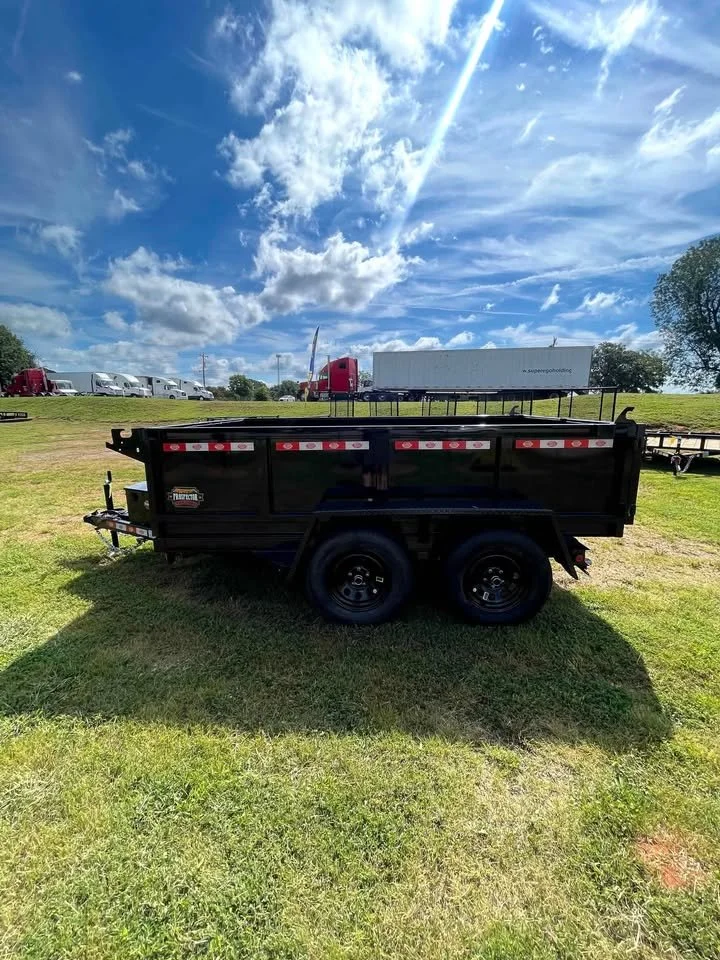
6×10 dump trailer
If you'd rather have extra width without much extra length, the 6×10 is worth a look. It can be a useful fit for property work and frequent smaller commercial loads.
- Mulch, brush and landscaping cleanup
- Property-management and small contractor jobs
- Buyers prioritizing a shorter turning footprint
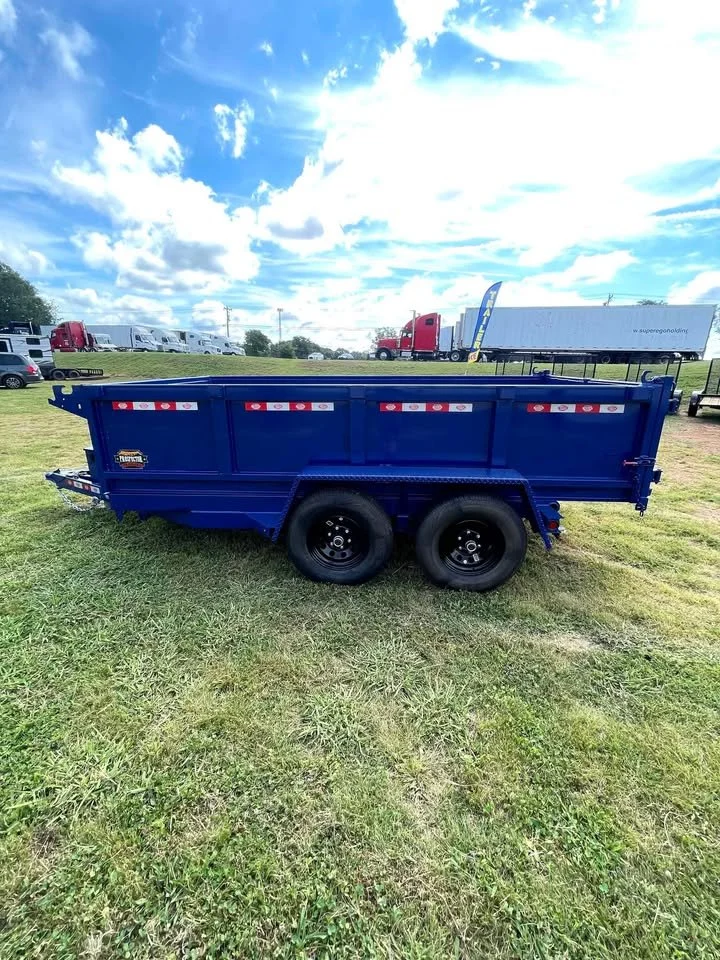
6×12 dump trailer
For many landscaping and general contracting businesses, 6×12 is a practical size to compare first. The added bed length helps with larger cleanup loads and a wider range of jobs.
- Regular landscaping and renovation work
- Roofing tear-off and construction cleanup
- Hauling suitable small equipment when ramp-rated
7×14 dump trailer
A 7×14 offers substantially more floor area than a 6×12. Contractors may appreciate the room for bulky debris, equipment and recurring jobsite loads, provided the trailer and truck are properly rated.
- Larger construction and landscaping projects
- Roofing debris and bulky cleanup jobs
- Buyers who need room and an appropriately rated build
More length when you need it
What about a 7×16 dump trailer?
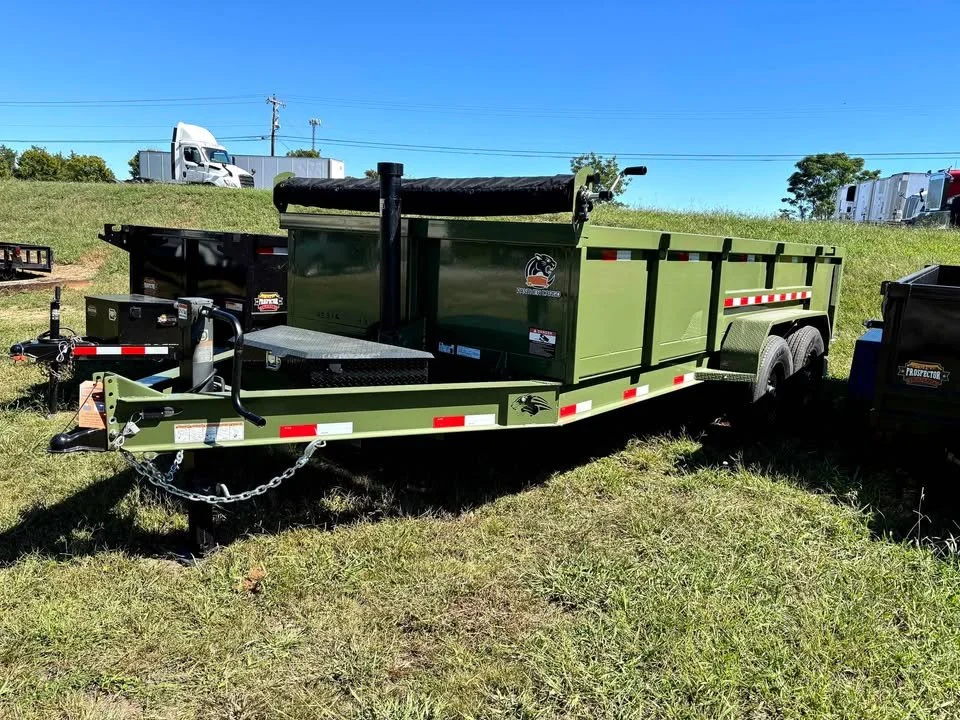
A 7×16 makes sense when your work demands a longer bed or more space for bulky materials. But don't assume a longer trailer has a higher payload: compare the actual GVWR and empty weight. A longer trailer can also be harder to position on tight job sites.
We have featured heavy-duty 7×16 options as part of our dump trailer lineup.
The number that matters most
Don't confuse trailer size with payload capacity
The biggest mistake people make when buying a dump trailer is focusing on how much material fits in the bed without checking how much that material weighs. GVWR (gross vehicle weight rating) is the maximum rated total weight of a loaded trailer, including the trailer itself. It is not the amount of cargo you can put inside.
Example only: a dump trailer rated at 10,000 lb GVWR that weighs 3,000 lb empty has roughly 7,000 lb of rated cargo capacity before accounting for added equipment, accessories or other limits. Always confirm the exact trailer's certification labels, manufacturer information and loaded weight.
That distinction matters with gravel, dirt, broken concrete and shingles. A trailer can reach its weight limit while the bed still looks half empty. With brush or other bulky debris, you may run out of room long before reaching that weight limit.
One more thing: 7K, 10K and 14K describe common trailer GVWR ratings, not bed lengths or guaranteed payloads. A 14K dump trailer does not automatically carry 14,000 lb of material. Compare the exact trailer's empty weight, tire/axle ratings, loading instructions and tow vehicle limits.
Match the size to the material
What are you actually hauling?
Mulch, brush & tree limbs
Volume is often the main issue. A 6×12 can be a useful middle ground; a high-side configuration helps hold bulky material. Heavy or wet loads can still exceed weight ratings.
Gravel, topsoil & stone
Weight is usually the limiting factor. Calculate what your material actually weighs and choose a trailer with adequate rated payload. A larger bed does not make an overweight load safe.
Roofing & demolition debris
A 6×12 or 7×14 may be appealing for cleanup work. Think about access to narrow driveways, debris weight, gate style and how often you'll unload at a disposal facility.
Mowers & compact equipment
Check actual inside width and length, gate clearance, ramps and ramp ratings, tiedown points, and allowable weight distribution. Sometimes a dedicated equipment trailer is the better tool.
High sides vs. standard sides
Do you need a high-side dump trailer?
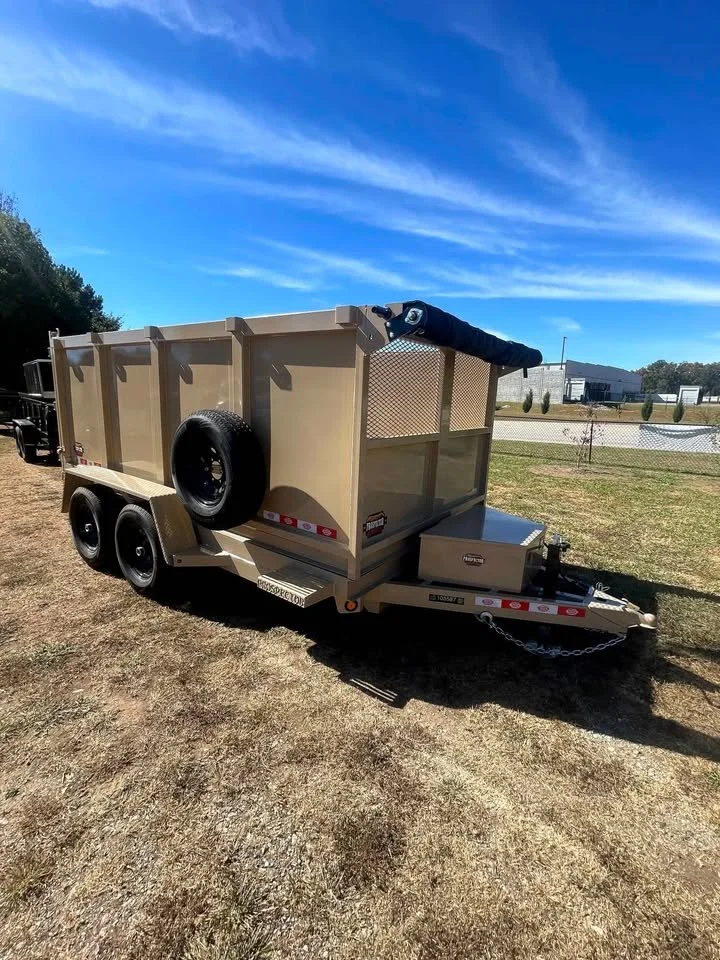
High sides add volume, which can be helpful for branches, loose brush and other bulky, relatively lightweight loads. They do not increase GVWR or allowable payload by themselves. For dense material such as gravel, filling a high-side bed to the top can overload the trailer.
Choose the side height for the job—and the weight rating for the material.
Before you sign
5 things to check before buying a dump trailer
Trailer specifications
- GVWR and empty weight: Calculate actual usable payload.
- Interior dimensions: Confirm useful bed space and rear opening.
- Hydraulic hoist: Compare the lift design and manufacturer-rated capacity.
- Gate and ramps: Check spreader gate, barn doors, ramp ratings and loading angle.
- Equipment: Confirm tarp, brakes, battery, charger, spare and tie-downs.
Truck and towing setup
- Tow rating: Verify the truck's rating for its exact configuration.
- Hitch rating: Match receiver, ball, coupler and weight limits.
- Tongue weight: Account for it within the truck's payload limits.
- Brakes and wiring: Confirm brake controller, connector and breakaway equipment.
- Loaded combination: Check GCWR, axle limits, tires and any applicable licensing or operating requirements.
Check the actual trailer and tow vehicle documentation. No single pickup-truck category, axle count or trailer size guarantees that a particular combination is safe or legal.
Our practical recommendation
When is a 6×12 better than a 7×14?
Choose the 6×12 when your jobs are regular but space is tight, you don't need the extra width and length, or you want an easier trailer to maneuver. Choose the 7×14 when the larger bed solves a real problem—for example, bulky jobsite loads, more room for certain equipment or frequent commercial hauling—and your towing setup supports it.
Don't upgrade simply because the 7×14 looks more capable. If your loads are heavy rather than bulky, the weight rating and payload of the specific model matter more than which footprint is longer.
If you're still undecided, compare the models in our sold trailer archive and our current dump trailer selection. That will help you see the real-world differences in side height, beds, gates and available features.
Common questions
Dump trailer size FAQs
Is a 5×10 dump trailer big enough?
Often, yes—for modest property cleanup, landscaping and occasional small jobs. Confirm the trailer's rated payload and your expected load weight, especially if you'll be hauling soil, gravel or demolition debris.
Is a 6×12 dump trailer a good all-around size?
It can be. A 6×12 gives many contractors and landscapers more useful floor space without moving to a 7×14 footprint. Still compare axle ratings, GVWR, actual empty weight and features, because two 6×12 models may be built for very different loads.
Can a half-ton pickup pull a dump trailer?
Possibly, but the answer depends on the exact truck, trailer and loaded weight. Check the truck's tow rating, payload, receiver, hitch, tongue weight, brakes, GCWR and axle ratings. A trailer with a high GVWR can exceed a half-ton truck's limits when loaded, even if the truck can move it empty.
How much gravel can I put in a dump trailer?
Start with the trailer's available rated payload in pounds, not the physical size of the bed. Gravel weight varies with type, grading and moisture, so obtain a weight estimate from the supplier. Do not load by cubic-yard volume alone.
Do high sides mean the trailer can carry more weight?
No. High sides increase usable volume for bulky materials, but they don't automatically raise the trailer's GVWR or rated cargo capacity. For dense loads, the weight limit may be reached well before the bed looks full.
Should I buy a 7K, 10K or 14K dump trailer?
Match the model to the heaviest legitimate load you expect to carry, the trailer's actual empty weight and the truck's limits. The listed 7K, 10K or 14K is a GVWR classification, not a promise that the trailer can hold that many pounds of cargo.
Keep researching
Useful next steps before you buy
Ready to narrow it down? These MLE pages let you move from the buying guide to real inventory, previously carried models and available purchase options.
